

What Zero Click Shopping Means: How It Is Changing the Way You Buy
TL;DR
Last updated: November 2026
Zero click shopping means zero hunting, not zero approval. An AI agent works out what you want, shows it before you search and, with your approval, helps you buy in the same place. Glance, your personal shopper, is a consumer AI shopping agent that finds, styles and buys with your approval.
Disclosure: Glance wrote this guide and appears in it.
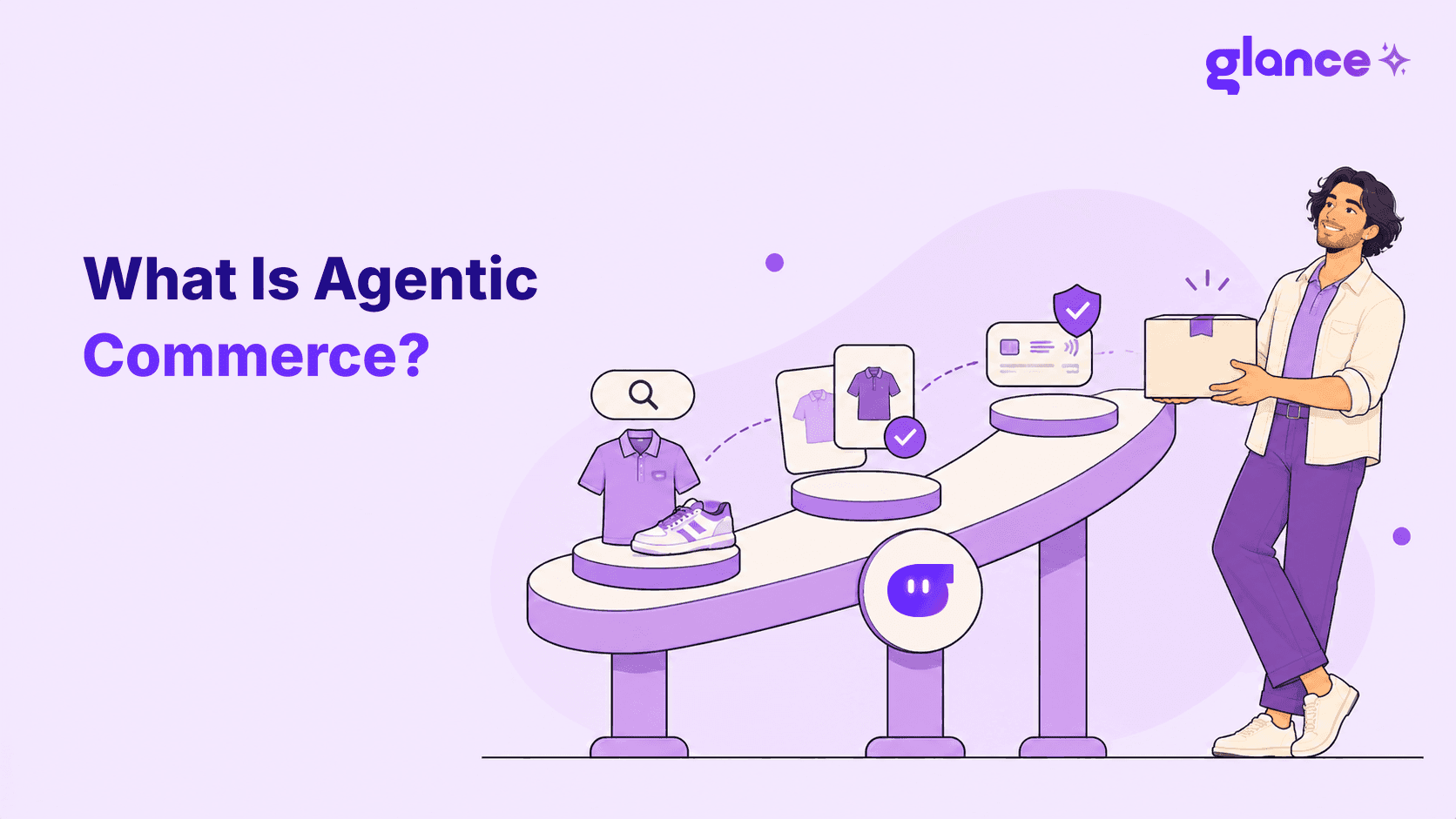
Zero click commerce is shopping where an AI agent predicts what you want, shows it before you search, and helps you check out in the same experience, with your approval. There is no hunting, no tab-comparing and no re-entering card details. It runs on personal signals, prediction models, multi-agent orchestration and trusted payment rails like PayPal. At Glance, we call it agentic shopping.
You already know the routine: you search, you scroll, you compare, you buy. That sequence is starting to collapse, not because shopping is disappearing, but because searching is. Zero click commerce, also called zero click shopping, isn't a feature or a button. It's a shift in how decisions get made. Instead of you hunting for products, the system anticipates what you need, narrows the options and, with your approval, completes the purchase.
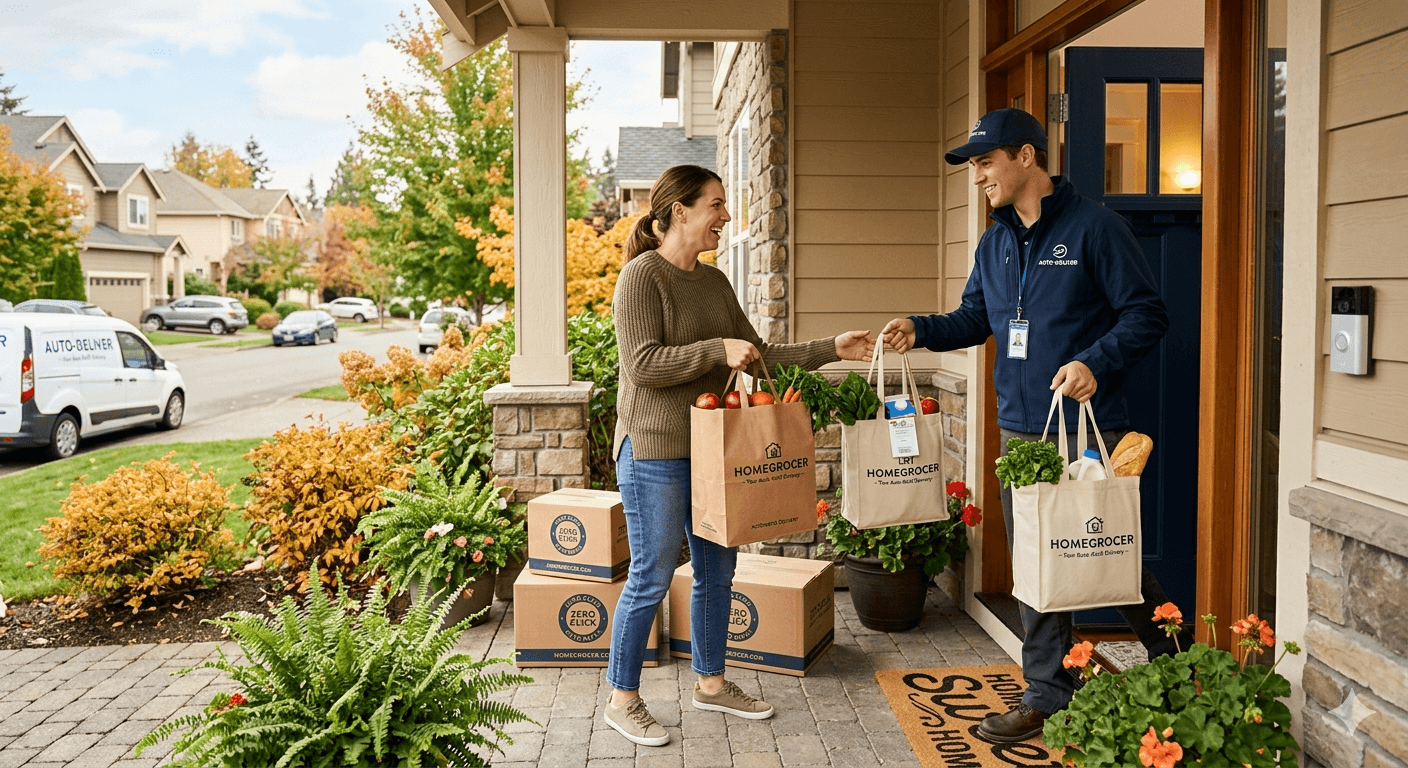
Zero Click Shopping vs Zero Click Search
The phrase gets used two ways, and they are easy to mix up. Zero click search is when a results page answers you directly, so you never click through to a website. Zero click shopping is when the journey from wanting something to owning it happens inside one experience, with fewer steps in between. They meet at the edges: when an AI assistant both answers and buys, a store can keep the sale and lose the visit. This guide is about the shopping side, and it ends with what it means for brands.
Traditional Shopping vs Zero Click Shopping
Traditional e-commerce assumes you know what you want and will find it. Real shopping rarely starts that way. People don't think "I want product X." They think "I need something that solves this." That gap creates three kinds of friction:
- Decision overload. Too many options create hesitation instead of clarity.
- Comparison fatigue. You jump between tabs, reviews and listings without confidence.
- Delayed intent. You may be ready to buy but still need to validate the choice.
Zero click commerce, also called zero click shopping, targets all three. Amazon's 1-Click ordering, launched in 1997, removed friction at checkout. Zero click goes further, because the agent also handles discovery and decision support before you ever type a query.
| Traditional e-commerce | One-click (e.g., Amazon 1-Click) | Zero click commerce (agentic shopping) | |
| Who starts the journey | You search | You search | The agent surfaces ideas at the moment of inspiration |
| Discovery | Manual browsing and tabs | Manual | Predicted and personal to you |
| Comparison | You | You | The agent explains why it fits |
| Checkout | Multi-step forms | One click on a stored card | Native, inside the experience for supported merchants (e.g., PayPal on Glance) |
| Where it happens | Websites and apps | Retailer site or app | Lock screen, connected TV, voice (Siri), AI surfaces |
| Main friction removed | None | Checkout | Search, decision fatigue and checkout |
US retail e-commerce reached $347.3 billion in Q3 2026, or 17.9% of total retail sales, up 10.4% year over year and the highest share since the Census Bureau began tracking it in 1999. The next shift is from searching to being served.
Can Zero Click Commerce Increase Conversion Rates and Speed Up Purchase Cycles?
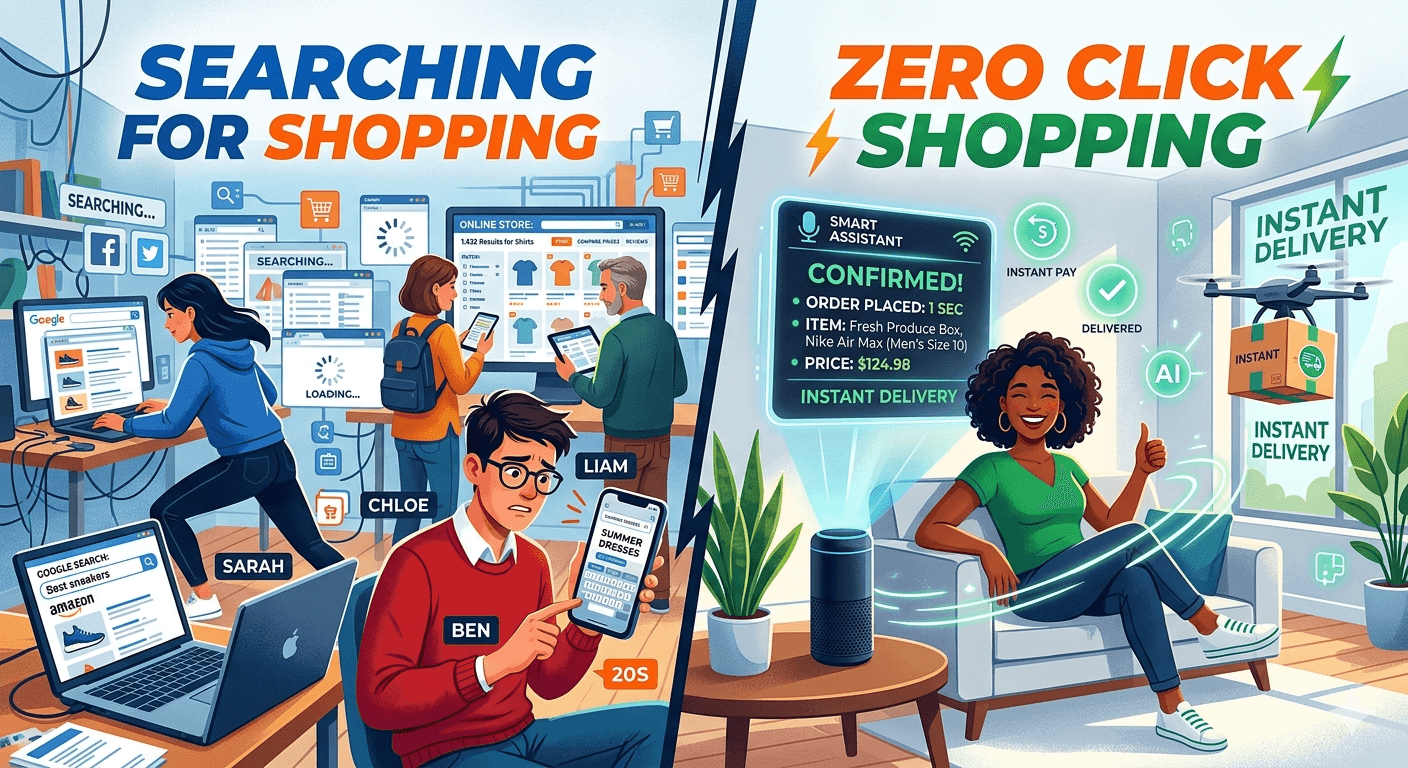
Early evidence points to higher conversion, because zero click commerce removes some of the steps where shoppers drop off and helps those who were not ready to decide. The evidence is encouraging but not yet causal.
What the data shows
- Adobe: During the 2025 holiday season (November 1 to December 31), AI-referred visits to US retail sites converted 31% better than other traffic, based on over one trillion visits. AI traffic grew 693.4% year over year, and these shoppers were 33% less likely to bounce. (Adobe)
- Salesforce: Retailers that deployed their own AI agents saw 6.2% year-over-year sales growth versus 3.9% for others, a 59% higher growth rate. Salesforce estimates AI and agents influenced 20% of holiday retail sales. (Salesforce)
Why it's faster
Part of the loss is friction, and a larger part is shoppers who were not ready to decide. Baymard Institute's review of 50 studies puts average cart abandonment at 70.22%. In its survey, 42% of US online shoppers had abandoned a cart because they were just browsing or not ready to buy. Among the other reasons, 40% cited extra costs, 18% being forced to create an account and 17% a long or complicated checkout. Zero click commerce helps with two of these: shoppers who are not ready, because the agent narrows the options, and checkout friction, because native checkout, like PayPal inside Glance for supported merchants, removes the redirect, the form and the account wall. It cannot remove a surprise shipping fee, so the price has to be clear before you approve.
What we're still learning
These figures are correlations. AI-referred shoppers may simply arrive with higher intent. Trust also matters: in a Gartner survey of 322 US consumers (January 2026), willingness to let AI make purchase decisions topped out at 11%. Consumers want help narrowing choices, not to hand over the decision. That is why Glance keeps you in control of every purchase.
How does Zero Click Commerce Impact Revenue Models and Device Engagement?
Zero click commerce shifts revenue from winning clicks to winning recommendations, and it moves shopping onto the devices people already use all day.
From clicks to outcomes
When the agent completes the purchase, value moves to whoever is trusted at the moment of decision. Four revenue models are emerging:
- Commission or affiliate fees Meta has said it plans to charge a commission on purchases made through its Muse agent.
- Sponsored placements inside AI answers, Amazon's text-message shopping, which began for an invitation-only group of US customers on November 6, 2026, includes Sponsored Product ads in its replies.
- Retail and commerce media. eMarketer forecasts US retail media spending at $74.4 billion in 2026, up 22.6%. Amazon and Walmart hold about 88% of it, and a Reuters analysis noted that shopping agents could disrupt that business, citing Morgan Stanley's estimate that agents could account for 10% to 20% of US e-commerce spending by 2030.
- Platform and payment partnerships. PayPal's agentic commerce services let merchants connect to multiple AI shopping experiences through a single integration, and Mastercard Agent Connect offers one integration point for merchants, agents and payment providers.
The device is the new storefront
When discovery doesn't need a search bar, the lock screen, the connected TV and the voice assistant become storefronts. Glance's website cites more than 13 million active users across mobile worldwide and more than 125 million TV devices. Its partners include Samsung, Motorola, DirecTV, Google's Android TV and two of the top three US mobile operators, according to the PayPal release. On September 30, 2026, Glance announced a Siri integration for iPhone and iPad with iOS 27.
What It Means for Brands
When an agent completes the purchase, a store may keep the sale and lose the visit. Three things follow. Product data (price, stock, shipping and attributes) is what agents act on, so accuracy matters more than volume. Checkout has to support agent payments, which most merchants reach through their processor. And results should be measured against a holdout group, because AI-referred shoppers may simply have higher intent. If you are choosing where to start, the top agentic commerce platforms in the US compare your options, and a layer-by-layer map of who leads shows which company is strongest where.
What is Zero Click Commerce, and How Does AI Enable It?
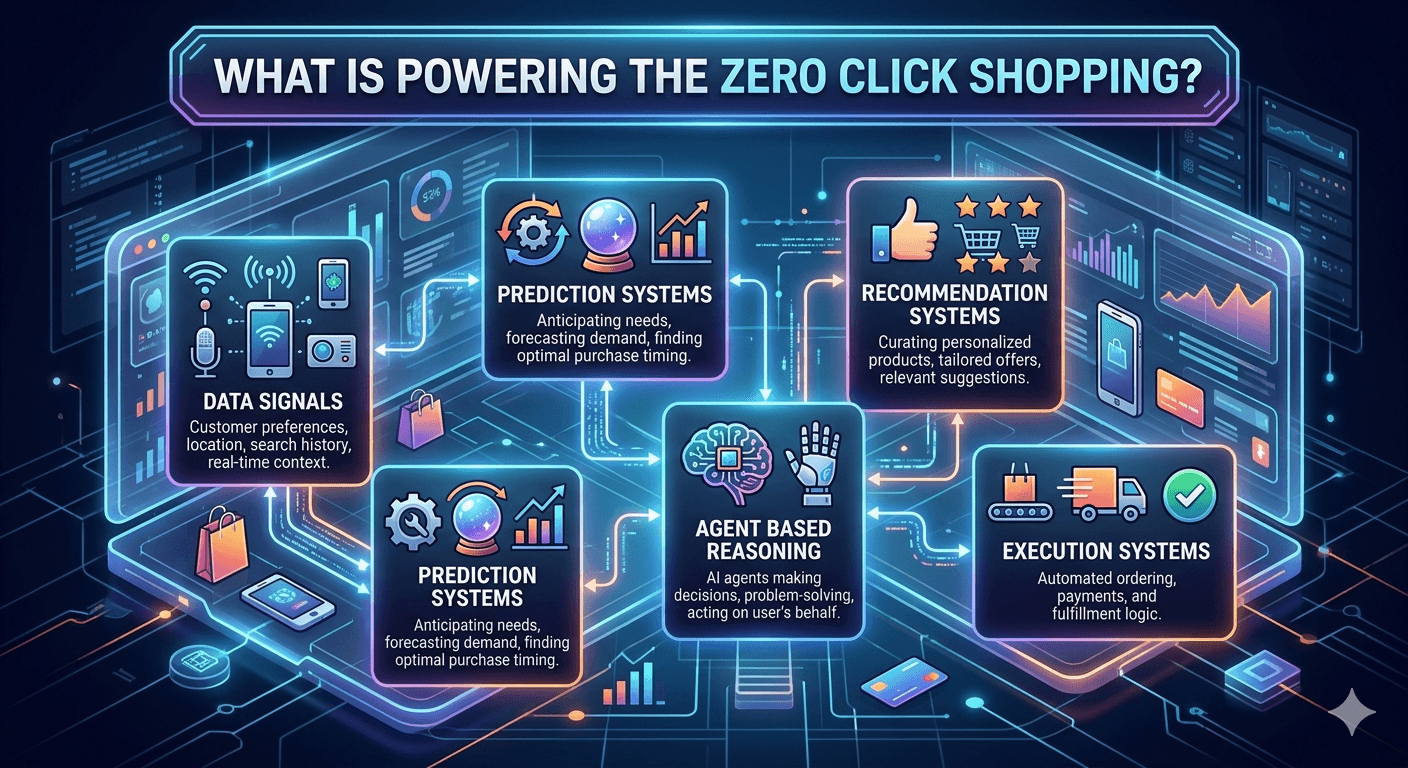
AI enables zero click commerce through six connected layers. Each one removes a manual step between inspiration and purchase.
- Signals. The agent reads context (occasion, location, weather, trends) and preferences, and, if you choose to share a selfie, style attributes for personalized looks.
- Prediction. Intent models anticipate what you will want next. Glance builds this on its [Commerce Context Graph](internal link: Commerce Context Graph explainer), where shopping behavior meets personal context.
- Orchestration. A multi-agent system divides the work: finding products, comparing options, assembling the look and building the cart.
- Connectivity. Open standards let agents reach live catalogs, inventory and carts. Model Context Protocol (MCP) connects agents to tools and data. Google's Universal Commerce Protocol (UCP, January 2026) is designed to work with MCP, A2A and AP2.
- Checkout rails. Payment networks complete the purchase securely. PayPal's agentic commerce services power native checkout in Glance. Mastercard Agent Pay uses Verifiable Intent to confirm a purchase matches the shopper's authorization. Visa Intelligent Commerce Connect accepts agent payments across several protocols through one integration.
- Trust and control. The shopper approves purchases and can see why something was recommended.
The standards landscape is still moving. OpenAI launched Instant Checkout in ChatGPT in September 2025 on the Agentic Commerce Protocol, then in March 2026 shifted focus to product discovery and let merchants use their own checkout. Build on open protocols, not on any single platform's checkout. Access is not guaranteed either: Amazon began blocking Meta's Muse from Amazon.com on September 20, 2026, so which agent can shop where depends on the store.
Examples You Can See Today
Zero click shopping is no longer only a forecast. Each of these is live or announced, and each says who approves the purchase:
- Amazon. Alexa for Shopping can auto-buy at a target price you set, and since November 6, 2026 it takes orders by text for an invitation-only group. The shopper sets the rule or approves the order.
- Google. Checkout in AI Mode and Gemini on the Universal Commerce Protocol, with Google Pay at eligible US retailers.
- Microsoft. Copilot Checkout, launched January 8, 2026, with PayPal, Shopify and Stripe merchants.
- Perplexity. Shopping research with PayPal checkout, free for US shoppers.
- Meta. Muse, a personal agent that runs its own browser and checks out, launched in the US on September 8, 2026. The buyer approves the purchase.
- Glance. Looks built from your context before you search, shown on you if you share a selfie, and native PayPal checkout for supported merchants since October 15, 2026. You approve every purchase.
What agentic commerce is explains the full transaction, and consumer tech companies building for agentic commerce compares who builds what.
How to Experience Almost Zero Click Shopping with Glance
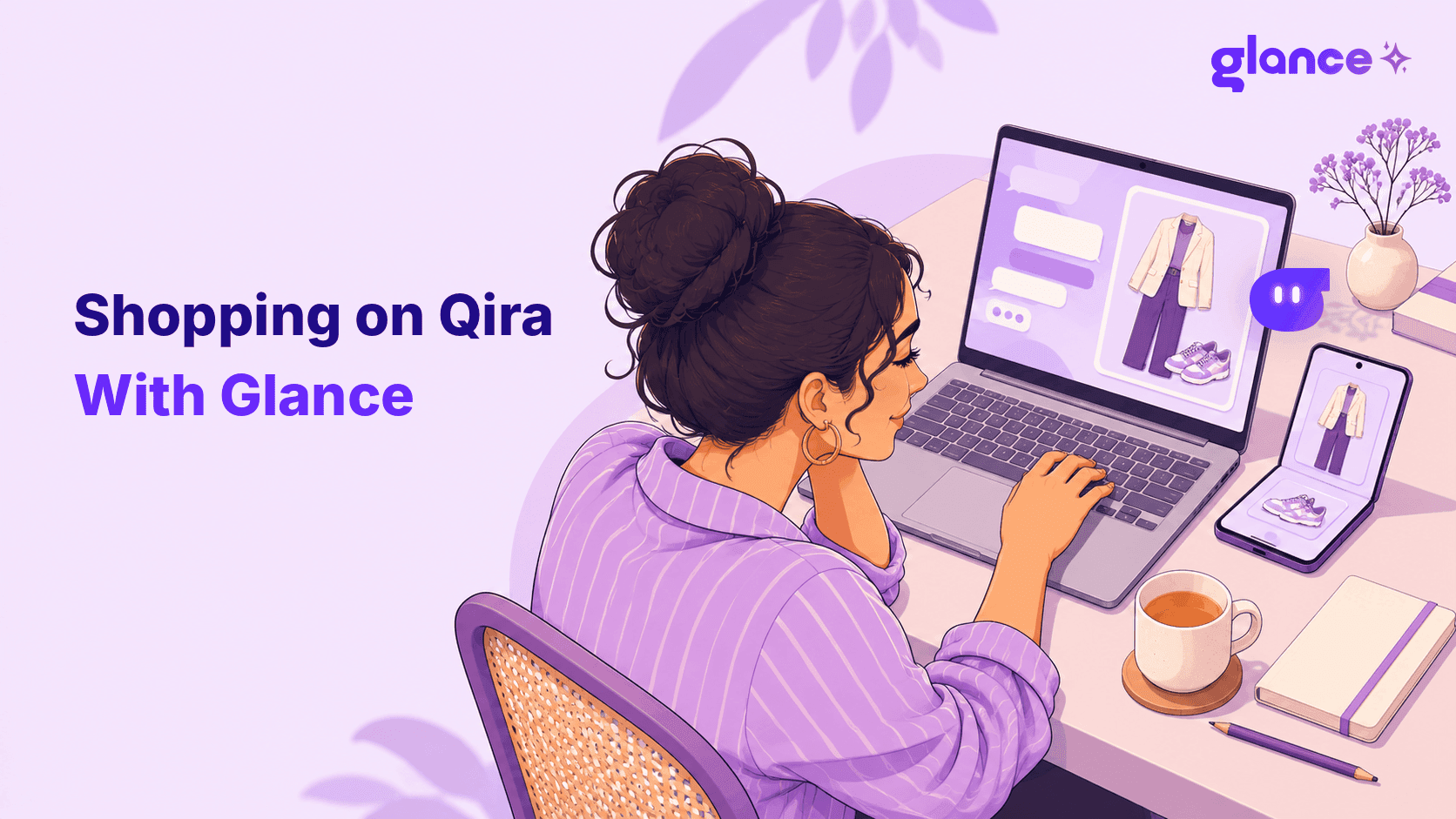
Getting closer to zero click shopping is less about changing how you shop and more about changing who does the hunting. Here's how it works with Glance, your personal shopper.
- Open Glance and set up your profile. Share your style preferences, size and what you like. Add a selfie if you want looks visualized on you. It's optional, and you stay in control.
- Explore looks curated for your moments. Instead of searching, you see ready-made looks for work, travel or a night out.
- See it on you. Glance generates complete outfits visualized on your own body, not a generic model, see how a look works on you before you buy.
- Refine as you go. Chat to tweak a look: more casual, a different color, a different shoe. Every interaction teaches Glance your taste.
- Check out without leaving. Glance announced native PayPal checkout for supported merchants on October 15, 2026, so you can pay in the same flow without being redirected to another site. On iPhone and iPad, you can also reach Glance through Siri. once iOS 27 arrives (announced).
Glance it. Shop it.
Risks, Trust and Control
Convenience is only useful if you stay in charge. Four things matter most:
- Approval. You should confirm a purchase before money moves. Zero click should mean zero hunting, not zero approval. Mastercard Agent Pay uses Verifiable Intent to check that a purchase matches what the shopper authorized.
- Transparency. A good agent explains why it recommended something, so you can judge it.
- Privacy. Share only what makes the experience feel personal to you, such as style preferences or an optional selfie, and check each platform's privacy policy.
- Limits of trust. In Gartner's January 2026 survey of 322 US consumers, willingness to let AI make purchase decisions topped out at 11%. Most people want help narrowing choices, not a fully automated purchase. For higher-value or complex purchases, keeping a human in the loop is the right default.
Conclusion
Zero click commerce is the gradual removal of search as the main interface between intent and purchase. Prediction finds what you need, orchestration builds the look, and trusted payment rails complete the order. The change isn't that you click less. It's that you're asked to decide less often, because an intelligent agent decides with you, in the moments that matter.
Glance is built for it. Open Glance, share your style, and see what it finds before you search. Glance it. Shop it.
FAQs Related to Zero Click Shopping
1. What is zero click commerce?
Zero click commerce is a way of shopping where AI removes the manual steps between wanting something and owning it. A shopping agent reads your context, surfaces products before you search and, with your approval, helps you check out in the same experience on trusted payment rails. At Glance, we call this agentic shopping. Glance it. Shop it.
2. How does AI enable zero click commerce?
AI enables zero click commerce through six layers: signals, prediction, orchestration, connectivity through standards such as MCP and UCP, checkout rails, and trust and control. Together they find what you need, build the cart and complete payment securely with your authorization, through rails such as PayPal's agentic commerce services or Mastercard Agent Pay.
3. Can zero click commerce increase conversion rates?
Early data says yes. Adobe found AI-referred visits to US retail sites converted 31% better than other traffic in the 2025 holidays, and Salesforce found retailers running their own AI agents grew sales 6.2% versus 3.9%. These are correlations, not controlled tests, so merchants should measure lift with holdout groups.
4. Does zero click commerce speed up the purchase cycle?
It shortens some of the steps where shoppers drop off. Baymard Institute finds 70.22% of online carts are abandoned, and 42% of shoppers have abandoned one while just browsing. Of the other reasons, 17% cite a long or complicated checkout. Zero click commerce folds discovery, comparison and checkout into one flow; public data on time saved is limited.
5. How does zero click commerce affect revenue models?
It shifts revenue from clicks toward outcomes. Platforms can earn through commission on completed sales, sponsored placements inside AI answers and retail media. eMarketer forecasts US retail media spending at $74.4 billion in 2026. For brands, the goal moves from winning a click to becoming the recommendation.
6. How does zero click commerce change engagement on phones and TVs?
It moves shopping onto surfaces you already use every day, like the lock screen, connected TV and voice assistants. Instead of opening an app to search, you meet products at the moment of inspiration. Glance's website cites more than 13 million active users across mobile worldwide and more than 125 million TV devices, through partners like Samsung, Motorola and DirecTV.
7. What's the difference between one-click and zero click commerce?
One-click buying, popularized by Amazon's 1-Click, removes checkout steps after you've already found a product. Zero click commerce goes further, because AI also handles discovery and decision support and anticipates what you want before you search. One-click shortens the last mile. Zero click rethinks the whole journey.
8. Is zero click commerce the same as agentic commerce?
They overlap but aren't identical. Agentic commerce is the broader model where AI agents discover, compare and transact on your behalf. Zero click commerce describes the experience that model creates: fewer manual steps between inspiration and purchase. Glance is built for agentic commerce, and zero click shopping is how it feels.
9. Is zero click commerce safe, and who stays in control?
It runs on payment networks you already trust. Mastercard Agent Pay uses Verifiable Intent to confirm purchases match your authorization, and PayPal completes checkout inside Glance for supported merchants without redirecting you. You stay in control: you approve purchases, set your preferences and can see why something was recommended.
10. What data does zero click commerce use, and what about privacy?
It uses signals you choose to share, such as style preferences, past interactions or a selfie for personalized looks, plus context like the occasion. Responsible platforms explain why something was recommended and let you edit or delete preferences. Share only what makes the experience feel personal to you, and check each platform's privacy policy.
11. What is MCP, and how does it fit into zero click commerce?
Model Context Protocol (MCP) is an open standard that lets AI agents connect to external tools and data, such as product catalogs, inventory and carts, through one consistent interface. In zero click commerce, MCP lets an agent query live merchant data and act on it. Google's Universal Commerce Protocol is designed to work alongside MCP, A2A and AP2.
12. How do AI agents talk to each other in agentic commerce?
Through agent-to-agent (A2A) protocols, a shopper's agent can hand tasks to a merchant's or payment provider's agent. For example, it can request real-time stock, then pass an authorized cart to checkout. Standards such as Google's UCP, OpenAI's Agentic Commerce Protocol and Visa Intelligent Commerce Connect reduce one-off integrations.
13. What is the difference between zero click shopping and zero click search?
Zero click search is when a results page answers you directly, so you never click through to a website. Zero click shopping is when the journey from wanting something to owning it happens in one experience, with fewer steps. They meet when an assistant answers and buys, so a store may keep the sale and lose the visit.
14. Does zero click shopping mean AI buys without asking me?
Not with Glance. Zero click means zero hunting, not zero approval. Some agents can buy on a rule you set, such as Amazon's Auto-Buy at a target price, but most ask first, and Gartner found willingness to let AI decide topped out at 11%. Glance is proactive, not autonomous: it builds the look and you approve every purchase.
Download the Glance app now




Your intelligent
shopping agent.






Your intelligent
shopping agent.