


What Google Did for Search, Agentic Shopping Is Doing for Your Next Look
TL;DR
Last Updated: November 2026
Google changed search by replacing navigation with description. Shopping is making the same shift, and Google is moving into it too. Glance, your intelligent shopping agent, covers a different slice: proactive discovery that shows complete, shoppable looks on you before you search, in its app and on supported phone lock screens, with you deciding whether to buy.
- Before Google, finding information meant knowing where to look. Libraries. Encyclopedias. Directories. The effort was entirely on you.
- Google did not make those systems better. It changed the starting point, from "navigate to information" to "describe what you need and it finds you."
- Commerce has been waiting for the same shift. Online shopping made the catalog bigger. It did not change the model.
- That model, you search and the system responds, is still the foundation of most AI shopping tools. Google itself is now moving beyond it, with AI Mode, UCP checkout and Universal Cart.
- Glance applies the same shift to fashion discovery: instead of waiting for a search, it reads your context and shows looks before you ask.
- This is not about better search results. It is a different starting point altogether.
- It is proactive, not autonomous: Glance builds the look, and you decide whether to buy.
You know the feeling. You are looking for something online and somehow walk away with nothing, despite spending 40 minutes trying. That friction has a name. And commerce has been living with it since the search bar was invented. This guide covers what Google changed, why commerce has been waiting for the same shift, what Google is doing in shopping now, and where Glance fits.
What Google Actually Changed — And What It Didn't
You know the feeling. You are looking for something online and somehow walk away with nothing — despite spending 40 minutes trying. That friction has a name. And commerce has been living with it since the search bar was invented.
But before we get to commerce, go back further. Before Google.
Finding information meant knowing where to go. You called the library. You pulled out the encyclopedia. You asked someone who might know. The information existed — but getting to it was your problem. The effort was yours. The system was passive.
Google didn't improve any of those systems.
It didn't build a better encyclopedia. It didn't train more expert directories. It changed something more fundamental: the relationship between you and the information you needed.
Suddenly, you didn't need to know where information lived. You described what you were looking for — sometimes just a few words, sometimes a half-formed thought — and the system found it. You stopped navigating to information. Information came to you.
That change is what made Google transformative. Not the index. Not the servers. The starting point.
Everything before Google asked: where do I go to find this?
After Google, the question became: what am I looking for?
That shift — from location to description, from navigation to intent — is the most important thing Google did. And it is exactly what commerce has not yet done.
Commerce Has Been Waiting for the Same Shift
Online shopping made the catalog bigger. It did not change the model.
Think about how you shop online right now. You open an app. You type something into a search bar. You scroll through hundreds of results. You filter. You compare. You close the tab with nothing in your cart. The catalog is enormous. The experience is exhausting.
This is not a new problem. It is the same model that existed before the internet — just faster and with more options. Before e-commerce, you walked store aisles manually. You asked a sales assistant. The model was physical navigation — presence required, effort expected. E-commerce moved the catalog online. The aisles became category pages. The sales assistant became a search bar. But the underlying logic never changed.
Then came recommendation engines. 'People also bought.' 'You might like.' 'Based on your history.' Useful — but still reactive. They observed your behaviour and optimised around it. Better suggestions. Same model.
Then came AI-enhanced search. Smarter ranking. More personalised results. Natural language queries. Visual search. All of it an improvement on the reactive model, but still the reactive model. The search bar got smarter. The starting point never changed.
By 2026, you encounter countless fashion options every week across apps, feeds, and retail sites. The catalog has never been bigger. The tools have never been smarter. And the experience has never been more exhausting — because no matter how clever the technology gets, you still have to go looking.
That is where commerce sits today. Exactly where information sat before Google. That is starting to change, and Google is part of the change.
Did you know? Adobe measured a 693.4% year-over-year increase in AI-referred traffic to US retail sites during the 2025 holiday season, and those visitors converted 31% better than other traffic. The shift from search-led to intelligence-led discovery is already measurable in traffic data.
Google Is Moving Too: What Changed in 2026
The analogy has a twist: Google itself is moving into agentic shopping. In January 2026 it announced the Universal Commerce Protocol, an open standard co-developed with Shopify, Etsy, Wayfair, Target and Walmart. It powers checkout on eligible products in AI Mode in Search and the Gemini app, alongside a Business Agent that lets shoppers chat with brands. CNBC described Google as positioning itself as the lead architect of agentic commerce.
At I/O in May 2026, Google added Universal Cart, which it describes as an intelligent, proactive shopping cart that works across Search, Gemini, YouTube and Gmail, with AP2 letting shoppers set guardrails on agent payments. Google says people shop across Google more than a billion times a day.
So the question "who is doing for shopping what Google did for search?" now has more than one answer, depending on the layer. Google is building a search-led version. Even so, much of it is still the reactive model with an agent attached: you start the conversation, or you add to the cart. Starting before you ask is a different slice of the shift.
Who is doing what
| Layer | Who | What they do | Where it starts |
| Proactive consumer agent | Glance | Reads your context and shows shoppable looks on you before you search, in its app and on supported lock screens | Your context |
| AI search and checkout | Google (AI Mode, Gemini, Universal Cart) | Conversational shopping and checkout through UCP for eligible merchants | Your question or your cart |
| Merchant enablement | Shopify | Connects merchant catalogs to AI shopping surfaces | The merchant's product data |
| Payments and trust | PayPal, Mastercard, Visa, Stripe | Secure, authorized purchases made by agents | The checkout |
Laid out layer by layer, with dates and sources, who is leading agentic commerce in 2026 looks different at every stage.
What Proactive Commerce Actually Changes
The structural shift in commerce mirrors exactly what Google did in information.
Instead of you navigating to products, the intelligence navigates to you. Instead of you describing what you want in a search bar, the system reads what you need from signals you are already generating — your physical features (if you share a selfie), your location, what is trending in your city, which holidays or occasions are near, and how you have engaged with previous looks. Not what you typed. What you actually are, and what your life looks like right now.
The starting point changes from you search to it already knows.
For fashion specifically, this matters more than in almost any other category. Fashion intent is inherently personal and contextual in a way that a search bar can't capture. You rarely know exactly what you want when you open a shopping app. You know a feeling. An occasion. A vibe. A sense of what your wardrobe is missing without being able to name it.
You would never think to search for "something for Coachella that works for your coloring and the desert heat at night." Tell Glance you are going, and it builds the look around your coloring, the forecast and what is trending. That is the shift.
This is what agentic shopping means in practice. Not a smarter chatbot. Not a better recommendation widget. Not a more relevant ranked list. A different starting point entirely — the same structural leap Google made, applied to how you find your next look.
What Makes This Different From Better Search
This is the critical distinction — and the one most often missed.
Google's classic Shopping results are reactive: you type a query, and they return product listings. Its newer AI Mode and Universal Cart add conversation and checkout, but you still start the conversation. You initiate. The system responds. It is faster than a department store, but the starting point is the same.
Google Search did something different. It changed your relationship with content entirely. You no longer needed to know how to navigate to what you were looking for. You only needed to know what you were looking for — and increasingly, not even that precisely. Google learned to complete your intent from fragments.
That is the distinction that matters here.
Better AI search in fashion does not make this shift. A more personalised search bar still starts with a query. A smarter recommendation engine still starts with your click history. Every improvement on the reactive model is still the reactive model.
The shift Glance represents is the other kind. The question the system answers is not 'what did you search for?' It is 'what does this person need right now, before they ask?'
That is the Google Search analogy. That is the structural shift. That is the difference between a better catalog and a different model of discovery entirely.
Did you know? Google says people shop across Google more than a billion times a day. Most of those moments still start with a query, a question or a cart. Glance starts from context.
| Feature | Google Search and Shopping | Glance |
| Starting point | You search or ask | Glance reads context and acts before you search |
| Output | Links, listings or an AI-assisted cart | Complete styled looks visualized on you |
| Context signals | The query you type or speak | Weather, local trends, occasions, optional selfie, behavior |
| Requires a query | Yes | No, though you can chat to refine a look |
| Surfaces | Search, Gemini, YouTube, Gmail | App, supported lock screens, connected TVs |
| Checkout | Google Pay checkout for eligible merchants | Native PayPal checkout for supported merchants |
| Model | Reactive: waits for your input | Proactive: reads your moment |
How Glance Makes the Shift Real for US Shoppers Today
The Glance Intelligent Shopping Agent is where this structural shift becomes a daily reality.
Glance starts without a search bar: no query to type, no category to browse, no filter to apply. It reads context before you express intent: your physical features from a selfie (if you choose to share one), live weather in your city, what is trending in your neighborhood, the holidays and occasions near you, and the behavioral signals you generate through everyday engagement.
How long you paused on a certain silhouette. Which colour stories you keep returning to. What you browsed before and after certain items. None of this requires you to do anything.
It reads all of this at once and builds one complete look — shown on your actual body, not a generic model's — before you open an app to look for anything.
The parallel to Google Search is close, though not exact. Before Google, you navigated to information. After Google, information came to you. Before proactive AI shopping, you navigated to products. With Glance, the look comes to you.
And like Google, the intelligence compounds the more you engage. Every pause, every swipe, every return visit makes the output more precise. You do not have to do anything to make that happen. It learns from what you do.
Reactive tools made the catalog more accessible. Glance's approach is to remove the need to start in a catalog at all.
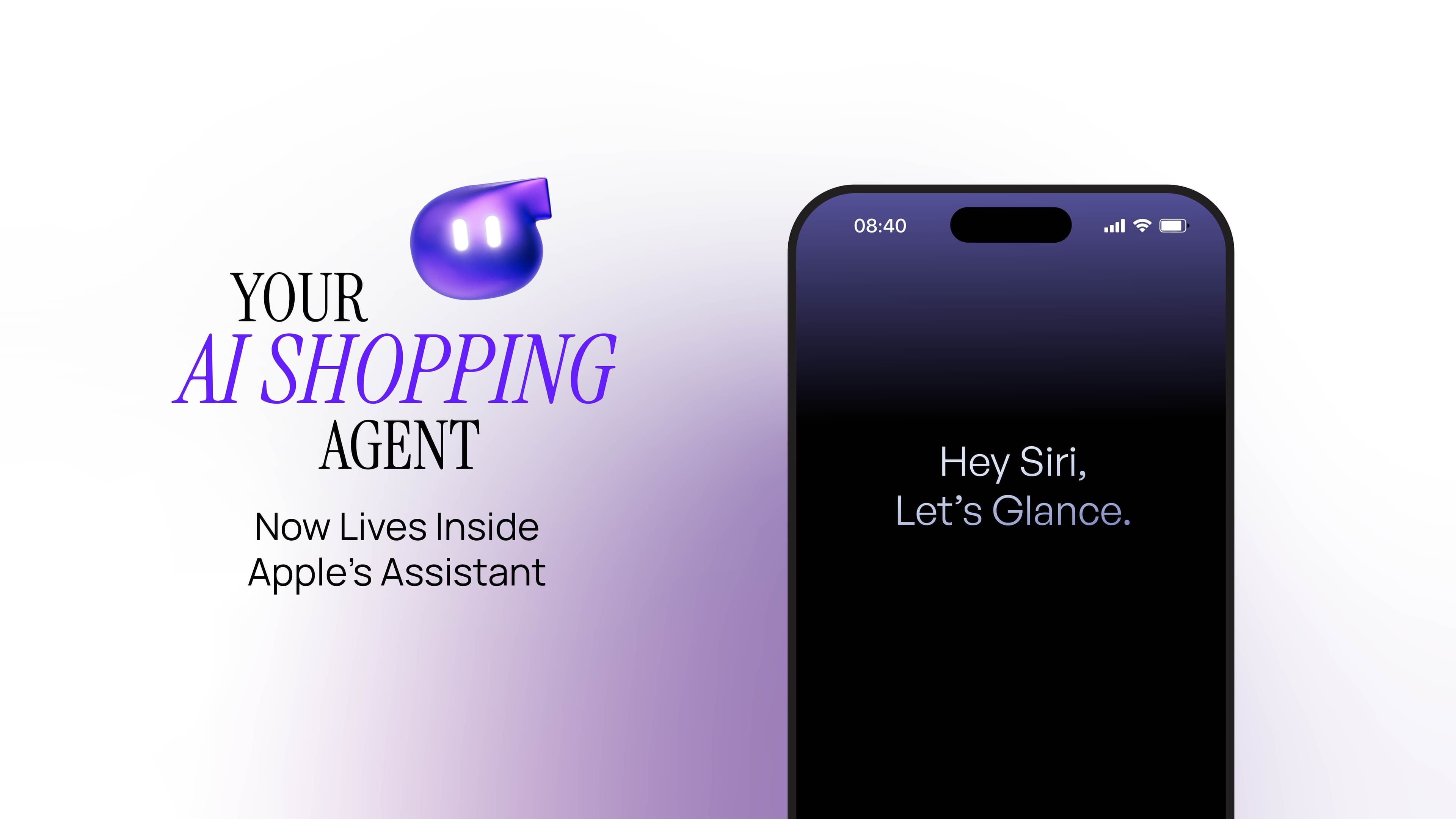
Glance is free to use, as an app and on supported lock screens and connected TVs.
Pick up your phone. It is already waiting.
Recent proof points include native PayPal checkout for supported merchants (October 15, 2026), one of several dated Glance milestones in 2026
Conclusion
Google's contribution to information was not a better encyclopedia.
It was a new relationship between you and the knowledge you needed — one where the effort of navigation became unnecessary because the intelligence was doing it for you. You stopped going to find information. Information started finding you.
Commerce is making the same shift now. The search bar is not disappearing overnight — just as libraries did not close the day Google launched. But its role is changing: from the starting point of discovery to the fallback for edge cases, exactly as physical directories became once Google made them redundant.
Several companies are building toward that moment, from search, from merchants and from payments. Glance is building it from the consumer side: not a smarter search for fashion, and not a better ranked list, but a system that starts from your context, your city and your occasions and shows you a look before you search.
That is a structural shift, and Glance's version is already available as an app and on supported phone lock screens.
Glance it. Shop it.
FAQs
What company is doing for shopping what Google did for search?
No single company, because the shift is happening in layers. Google is moving search into AI shopping with AI Mode, UCP checkout and Universal Cart, while Shopify, PayPal and Mastercard supply merchant and payment rails. Glance, your intelligent shopping agent, is the proactive consumer layer, showing shoppable looks on you before you search.
What is the difference between AI that changed commerce and AI that improved search?
AI that improved search makes the reactive model faster: better rankings and filters when you type a query. AI that changes commerce changes the starting point. Glance, for example, reads context such as weather, local trends and occasions and shows a curated look before you search. One improves the model, and the other replaces its starting point.
What is agentic shopping and how does it relate to Google Search?
Agentic shopping is commerce where AI acts on your behalf, discovering and curating products, with you approving purchases. Like Google Search, it shifts the work from you navigating to the system finding. Glance is an agentic shopping platform that does this proactively for fashion, while Google is building a search-led version.
Why is the analogy to Google Search and not Google Shopping?
Google Shopping's classic listings return results when you search, so it improved the catalog without changing the starting point. Google Search changed the relationship by letting you describe what you need. Glance follows the Search idea: it starts from your context, though Google's newer AI Mode now adds conversational shopping too.
How does Glance surface fashion looks without a search query?
Glance reads five streams of context at once: your physical features from a selfie, if you share one, live weather, regional trends, occasions and your behavior. It builds one complete look visualized on you, in its app and on supported lock screens. You can chat to refine it, then check out with native PayPal for supported merchants.
What did Google announce for AI shopping in 2026?
Google announced the Universal Commerce Protocol in January 2026, enabling checkout in AI Mode and Gemini for eligible US merchants. At I/O in May it launched Universal Cart, which works across Search, Gemini, YouTube and Gmail, and AP2, which lets shoppers set guardrails on agent payments.
Download the Glance app now





Your intelligent
shopping agent.







Your intelligent
shopping agent.