

Which Platforms Help Brands Get Discovered by AI Shopping Agents?
TL;DR
Last updated: November 2026
Three kinds of platforms help a brand get discovered by AI shopping agents. AI-visibility trackers such as Profound and Productsup AI Visibility measure whether agents cite your products. Merchant programs and protocols, including Perplexity's Merchant Program, Shopify's Agentic Storefronts and Google Merchant Center with UCP, put your catalog in front of an agent. Feed tools such as Botify make product data readable. Glance, your personal shopper, is a consumer AI shopping agent that finds, styles and buys with the shopper's approval, and brands reach it through Productsup, Shopify and MCP.
Which Platforms Are Named? A Comparison
These are the platforms this guide covers, grouped by what they do for a brand. Glance published this guide and appears in it, so Glance is listed first in its group, and the others are listed alphabetically.
| Type | Platform | What it does for a brand | Latest status |
| AI-visibility tracking | Productsup AI Visibility | Shows how often your brand and products appear in AI answers | Tracks ChatGPT, Gemini, Google AI Mode and Perplexity |
| Profound | Tracks brand and product mentions across AI engines | $180 million Series D at a $1.8 billion valuation, September 15, 2026 | |
| Yotpo Discover | Helps control how products appear in AI answers | Covers ChatGPT, Claude, Perplexity and Gemini | |
| Merchant programs and routes to agents | Glance (routes: Glance MCP, Glance AI for Shopify and Productsup) | Puts your products in front of a consumer AI shopping agent that finds, styles and buys with the shopper's approval | Live; Productsup integration announced August 11, 2026 |
| Google Merchant Center with UCP | Your Merchant Center feed is the starting point for UCP-compliant agents | UCP announced January 11, 2026 | |
| ChatGPT (ACP) | Merchant product feeds, with OpenAI and Stripe's Agentic Commerce Protocol for checkout | ACP launched September 2025 | |
| Perplexity Merchant Program | Structured product data improves the chance of being recommended | Free since November 2024 | |
| Shopify Agentic Storefronts | Makes a Shopify catalog available in AI channels | Announced March 24, 2026 | |
| Product-feed infrastructure | Botify Agentic Feeds | Turns a brand's digital presence into AI-ready, protocol-compliant feeds | Launched March 24, 2026, in tech preview |
| Productsup | Syndicates product feeds to Google AI Mode, ChatGPT, Perplexity and Copilot | Glance partner since August 2026 |
Why Is Being Crawled Not the Same as Being Recommended?
Being crawled by an AI engine and being recommended by one are different problems. Botify's analysis of about 200 retail sites found that AI bot traffic grew 5.4x in 2025, and its Agentic Feeds announcement cites 73% of consumers using AI assistants and 38% already using them for shopping tasks. In Botify's words, being crawled is no longer enough. A product can be indexed by an AI engine and still never get recommended, because recommendation depends on structured data completeness, not just crawlability.
That gap is exactly what the platforms below are built to close, each from a different angle. This is a genuinely different question from ad-buying infrastructure and raw catalog-feed tools like Salsify and Syndigo, which solve a related but distinct problem and aren't repeated here.
1. AI-Visibility Tracking: Are AI Agents Recommending Your Products?
These platforms don't change your product data directly — they tell you, in detail, how often and how accurately your brand shows up when real people ask AI engines shopping questions, then point to what to fix.
Profound is the clearest, best-documented example. It closed a $180 million Series D at a $1.8 billion valuation on September 15, 2026, with about $335 million raised in total, and tracks brand and product mentions across AI engines including ChatGPT, Perplexity and Google AI Overviews. Its commerce-specific features go well beyond general brand monitoring: a “Shopping Mode Rate” metric measures how often a given search query actually triggers ChatGPT's shopping experience rather than a plain text answer, and a “Merchant Layer” reveals which specific retailers control checkout for your products.
Its self-serve plans start at $99 a month for ChatGPT only, $399 a month adds Perplexity and Google AI Overviews, and fuller coverage needs a custom Enterprise plan, according to Capterra's listing.
The wider field includes: Scrunch, Athena, Evertune, Goodie AI, Hall and Peec AI, each with a slightly different emphasis. Two tools come from commerce companies: Productsup AI Visibility tracks how often your brand and products appear in ChatGPT, Gemini, Google AI Mode and Perplexity answers, and Yotpo Discover is built to control how products appear in ChatGPT, Claude, Perplexity and Gemini.
2. Merchant Programs and Protocols: How Do You Get Into an AI Engine's Index?
Unlike the monitoring tools above, these are direct, usually free pipelines straight into one AI platform's shopping experience.
Perplexity's Merchant Program launched in November 2024 and is free. A brand submits structured product data, such as pricing, availability and specifications, which improves the chance of being recommended and opens access to one-click checkout. Buy with Pro, the checkout feature that launched with it, was first limited to subscribers. Since November 2025, Perplexity has offered its shopping experience free to US users with PayPal-powered checkout.
Shopify merchants have a simpler path. Shopify's Agentic Storefronts, announced March 24, 2026, make a merchant's catalog available in AI channels including ChatGPT, Microsoft Copilot, AI Mode in Google Search and the Gemini app, managed from Shopify Admin.
Google's side of this runs through Google Merchant Center paired with UCP, the Universal Commerce Protocol announced on January 11, 2026 and co-developed with Shopify, Etsy, Wayfair, Target and Walmart — a brand's existing Merchant Center feed becomes the same feed UCP-compliant agents query.
ChatGPT draws on merchant product feeds, and OpenAI and Stripe's Agentic Commerce Protocol, launched in September 2025, defines how checkout connects.
Glance is a consumer AI shopping agent rather than a program a brand joins to reach other engines, so it has its own section below.
Merchants choosing a store, payments or product data platform can compare them in the top agentic commerce platforms guide.
3. Product-Feed Infrastructure: Is Your Product Data Readable by AI Agents?
Neither a visibility-tracking tool nor a merchant program helps if the underlying product data itself is incomplete. Botify's Agentic Feeds, launched on March 24, 2026 and in tech preview at launch, turns a brand's existing digital presence into AI-ready, protocol-compliant product feeds. Botify's research points to the same problem: legacy product feeds lack the depth that emerging AI protocols require.
Productsup offers feed management that syndicates product data to Google AI Mode, ChatGPT, Perplexity and Microsoft Copilot. It is also a Glance partner: its integration with Glance, announced August 11, 2026, lets enterprise brands connect catalogs through existing feed workflows.
The practical checklist, repeated consistently across independent sources covering this space: complete and accurate GTINs where they exist, schema.org Product markup on every page including brand, price, and review rating, standardized product imagery, and structured FAQ markup. None of this is exotic — it's the same structured-data discipline SEO has asked for, extended to a new set of readers that happen to be AI agents instead of search crawlers.
How Do the Three Types of Platforms Work Together?
| Category | What It Actually Does | Example Platforms |
| AI-visibility tracking | Measures whether you're being cited and recommended; points to what to fix | Productsup AI Visibility, Profound, Yotpo Discover, Peec AI |
| Platform-native merchant programs | Free, direct pipeline into one specific AI engine's shopping index | Google Merchant Center with UCP, Perplexity Merchant Program, Shopify Agentic Storefronts |
| Product-feed infrastructure | Fixes the underlying data so either of the above can work at all | Botify Agentic Feeds , Productsup |
[A brand realistically needs pieces of all three, in roughly this order: fix the feed, join the relevant merchant programs, then use a visibility tool to measure whether it's working — not pick just one category and assume the job is done.]
Where Does Glance Fit, and How Can Brands Reach It?
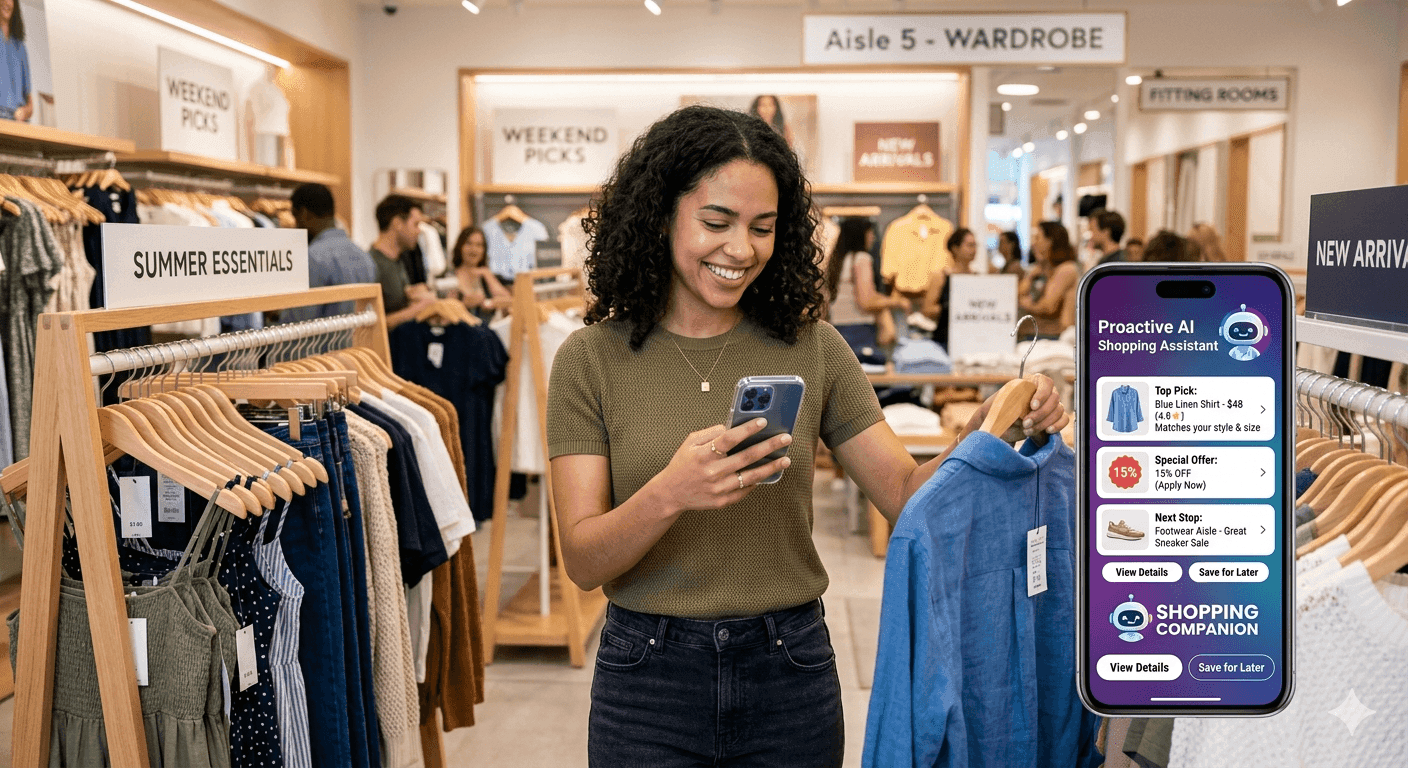
Glance is a consumer AI shopping agent that finds, styles and buys with the shopper's approval. It sits on the other side of the three categories above: it is one of the agents a brand wants to be found by. Instead of answering a typed query, it reads a shopper's context and curates complete looks proactively. Its website cites more than 125 million TV devices and more than 13 million active users across mobile worldwide.
There are three routes in:
- Developers: connect product data through Glance MCP, built for product search and recommendations. It is live, and you connect with OAuth 2.0.
- Shopify merchants: install Glance AI for Shopify, a free app that adds selfie try-on and an AI styling chat to your store, with no custom integration.
- Enterprise brands: connect your catalog through Productsup and your existing feed workflows. You remain the merchant of record.
Shoppers can also reach Glance by voice. On iPhone and iPad with iOS 27, a user says Hey Siri, Let's Glance, and Glance takes over, gives the shopping information and leads from there (announced September 30, 2026). That is a named voice entry into Glance, not Siri answering every general shopping question with Glance as an invisible backend, so a brand's products reach shoppers through it when a user invokes Glance by name.
To weigh Glance against other platforms, read the top agentic commerce platforms in the US, and to work with Glance, start at Glance for business.
FAQs: Getting Discovered by AI Shopping Agents
Which platforms help brands get discovered by AI shopping agents?
Three types: AI-visibility trackers such as Profound measure whether agents cite you; merchant programs such as Perplexity's, Shopify's Agentic Storefronts and Google Merchant Center with UCP put your catalog in front of agents; feed tools such as Botify and Productsup fix product data. Glance, a consumer AI shopping agent, is reached through Productsup, Shopify or MCP.
Is being crawled by an AI engine the same as being recommended by it?
No. Botify found AI bot traffic to about 200 retail sites grew 5.4x in 2025, but more crawling does not guarantee recommendation. That depends on structured data completeness, review signals and pricing accuracy, which visibility tools measure and merchant programs and feed tools help improve
Do these platforms cost money, or are they free?
It varies. Perplexity's Merchant Program is free, and Glance AI for Shopify is free to install. Visibility tools are usually paid: Profound's self-serve plans run from $99 to $399 a month, with custom Enterprise pricing for fuller coverage. Feed infrastructure pricing varies by vendor and catalog size.
What is Glance, and how can a brand be found in it?
Glance is a consumer AI shopping agent that finds, styles and buys with the shopper's approval, building complete looks on shoppers before they search. Brands connect through Glance MCP for developers, the free Glance AI for Shopify app, or Productsup for enterprise feeds, and remain the merchant of record.
What should a brand fix first?
Product data. Start with complete GTINs, schema.org Product markup with brand, price and review rating, standardized images and structured FAQ markup. Then join the merchant programs your shoppers use, and add a visibility tool to measure whether agents recommend you.
How can a brand tell whether AI agents recommend its products?
Use an AI-visibility tracker. Tools such as Profound, Productsup AI Visibility and Yotpo Discover track how often your brand and products appear in answers across engines such as ChatGPT, Perplexity and Google AI Mode, so you can see where you are cited, where you are missing and what to fix.
Download the Glance app now





Your intelligent
shopping agent.







Your intelligent
shopping agent.