

AI Magic Mirror: What It Is and Where to Try It
TL;DR
AI magic mirrors use AR and AI to let shoppers try outfits, makeup, and accessories on their real-time reflection without entering a trial room. They're now available at flagship US locations including Saks Fifth Avenue, Nike, Tommy Hilfiger, Anthropologie, Sephora, Uniqlo, H&M, and Gucci. Stores report meaningful return-rate improvements and, per Think with Google, 98% of shoppers who try AR-based virtual try-ons say it helps them shop better. Unlike the in-store mirrors covered here, AR shopping through apps needs no store visit at all — Walmart, Target, and IKEA all let you preview products from home, a different category fully covered in How to Experience Augmented Reality in Retail (link pending confirmed URL), including four more retailers doing the same thing.
Walk into a fashion store in the United States today and you can already feel the shift. Retail is slowly moving from racks and trial rooms to screens that understand your body, your style and even your hesitation while choosing between two outfits. This wave is being powered by a new generation of in store technology: the AI magic mirror.
The AI magic mirror is no longer a futuristic idea. It is a working piece of retail infrastructure that blends computer vision and augmented reality to show how a product looks on you without ever touching the fabric.
As shoppers demand faster decisions and brands look to reduce returns, this technology is becoming one of the most practical upgrades in fashion and beauty retail.
Let us explore what an AI magic mirror is, how it works, and where you can try it in the United States.
What is an AI Magic Mirror?
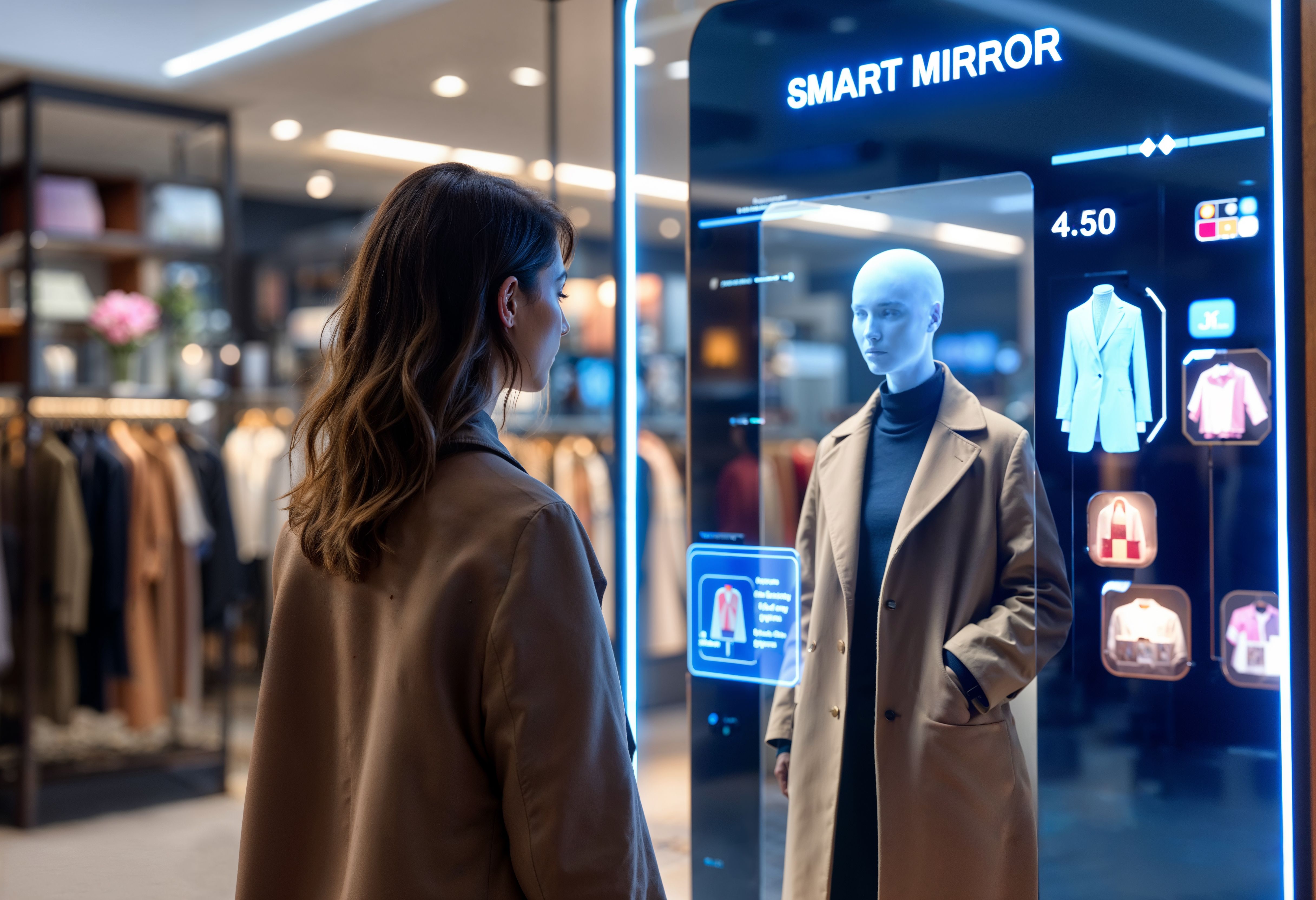
An AI magic mirror is an interactive mirror screen that uses augmented reality and artificial intelligence to project digital outfits, makeup, or accessories onto your reflection in real time. Think of it as a virtual trial room built into a full-sized display.
The mirror uses high-resolution cameras, computer vision models, and AR overlays to detect your pose, body proportions, skin tone, and movement — placing products on your reflection with realistic lighting, fabric fall, and color accuracy. The AI magic mirror has several other names, including smart mirror or virtual fitting mirror.
What Does an AI Mirror Do?
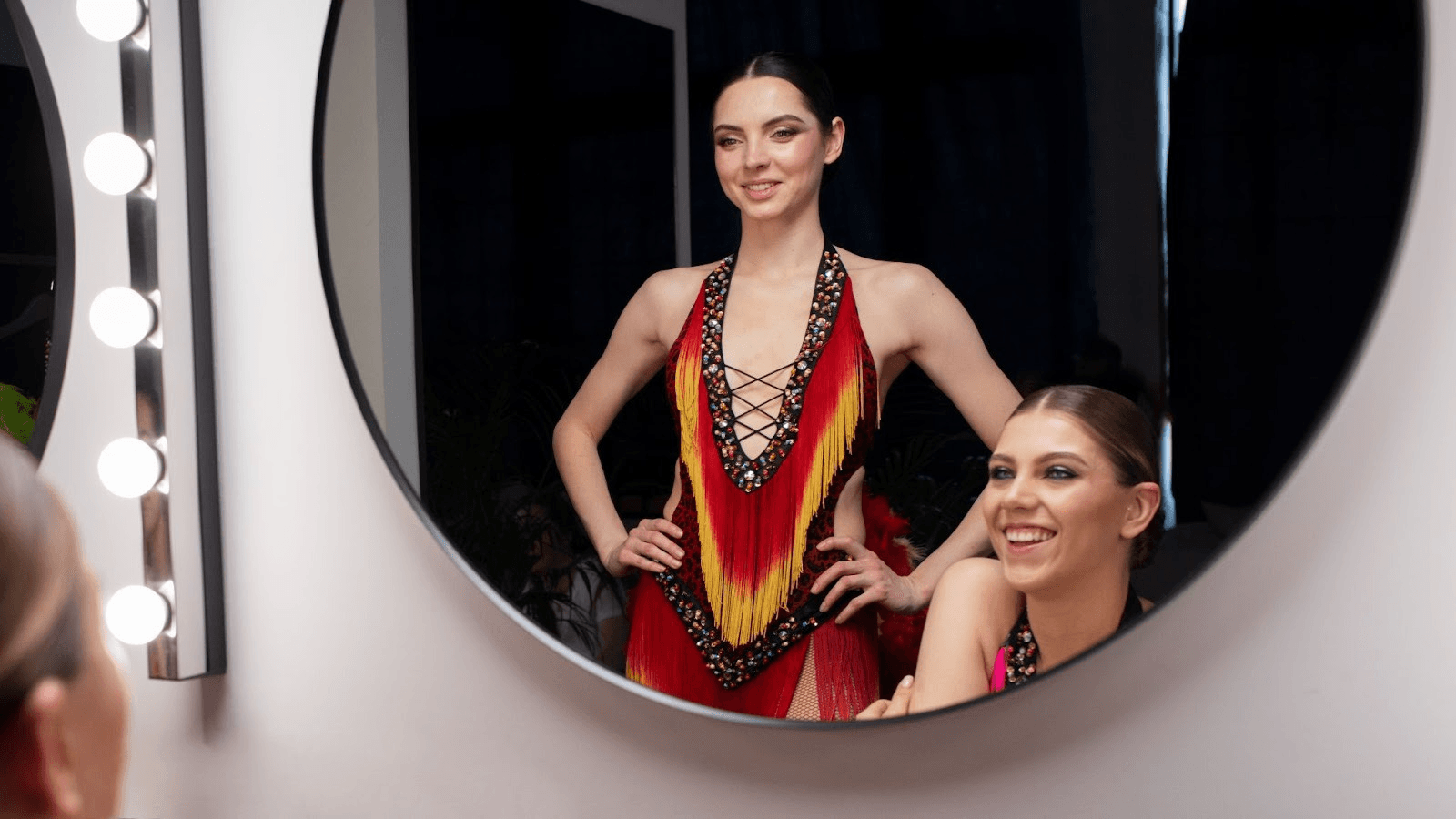
The AI mirror helps you try products digitally, and functions as your personal stylist, lighting expert, beauty advisor, and size guide all in one. It can scan your body frame, pick outfits from store inventory, recommend colors that match your undertones, and suggest accessories that complete the look.
Many retailers connect the mirror to in-store inventory — tap the screen to request a different size, and a store associate receives the alert. Mirrors equipped with RFID tags can detect the products you carry into the fitting space and instantly show virtual variations like alternative colors or matching items. The most advanced ones support social sharing, voice commands, motion detection, fabric simulation, and recommendations based on past visits.
How an AI Magic Mirror Works Step by Step?
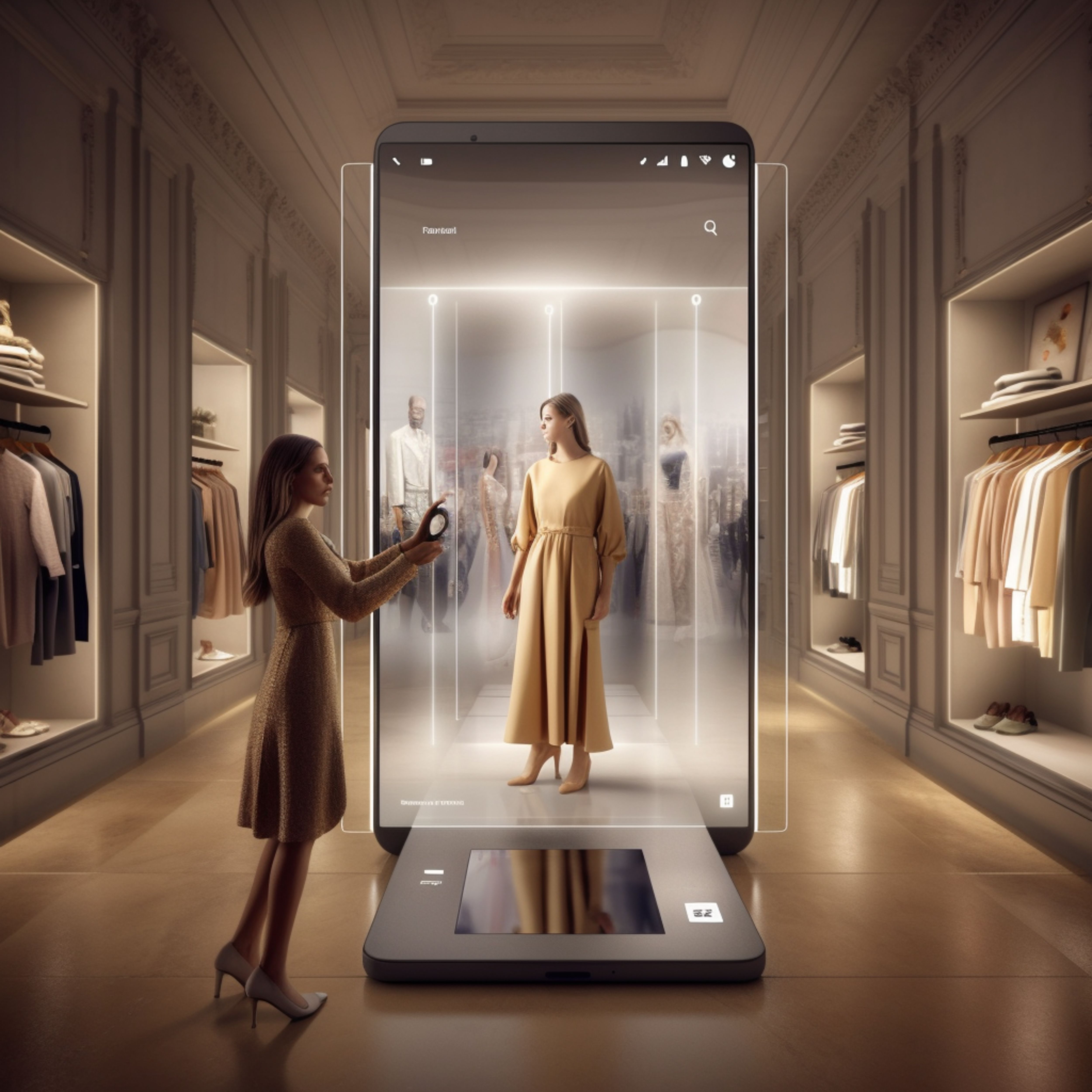
1. You stand in front of the mirror
2. The embedded camera scans your pose, posture, and approximate body dimensions
3. Computer vision models map your silhouette and skin tone
4. A 3D avatar is generated in real time
5. Clothing or makeup products are digitally placed on your reflection
6. Lighting and shadows adjust so the product feels natural
7. You change colors, styles, or sizes with taps, gestures, or voice
8. The mirror pulls product data from the store's inventory system
9. You can request a size or view similar items instantly
Tommy Hilfiger's own in-store AR mirror pilot raised foot traffic 60%, according to reporting on the program.
Is an AI Magic Mirror Worth It?
For shoppers, the value is straightforward: you see yourself in multiple outfits without the tiredness of changing rooms, evaluate fit and color faster, and make more confident purchasing decisions. Think with Google reports that 98% of shoppers who try AR-based virtual try-ons say it helps them shop better.
For retailers, the value compounds. Fit-related returns drop. Conversion improves. The National Retail Federation reports beauty retailers using smart mirrors see 30–40% increases in items considered per shopping session — a more specific, verifiable measure than a single ‘ROI’ figure, since payback typically plays out over a 12–18 month period rather than a fixed percentage.
There's a sustainability angle too: fewer returns means less fuel burned in reverse logistics and less wasted inventory. For beauty brands specifically, the hygiene benefit is real — customers try shades without shared testers.
Where AI Magic Mirrors Fall Short
Lighting conditions in a store can affect how accurately colors and textures render on your reflection. Fabric physics — how a specific material actually drapes, stretches, or moves — is still difficult to simulate perfectly, especially for structured pieces like blazers or fitted denim.
And the biggest limitation isn't technical at all: the mirror only works where it physically is. If your nearest location is across town, or the store is closed, the experience simply isn't available — unlike a shopping experience that lives on your own phone.
Where to Try AI Magic Mirrors in the United States?
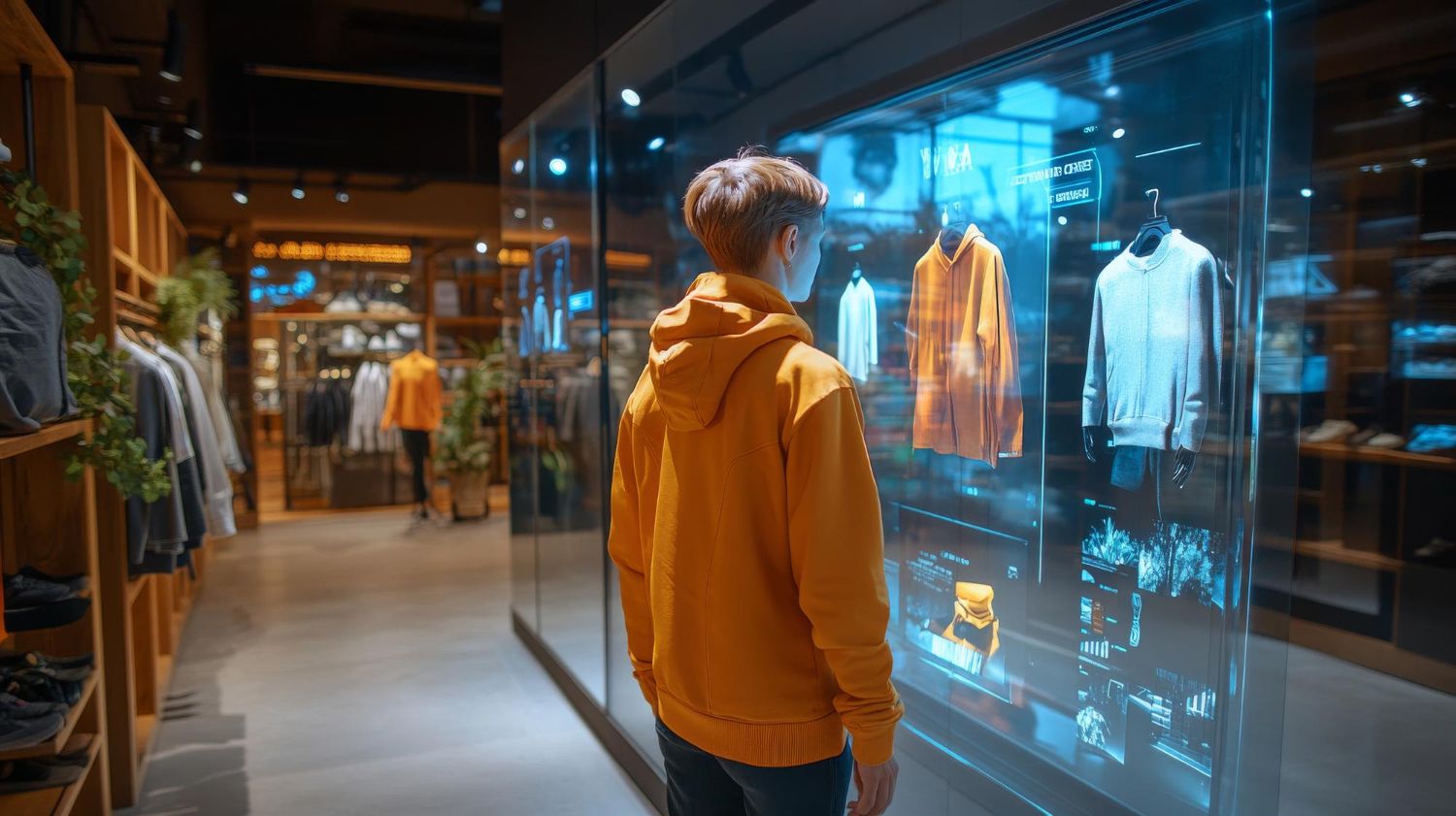
The best stores to experience AI-powered virtual fitting are located in major retail hubs including New York City, Los Angeles, and Chicago.
Saks Fifth Avenue — The NYC Fifth Avenue flagship offers AR mirrors that overlay designer outfits onto your real body. Scan items on the rack and see them appear on you instantly, complete with suggested sizes and styling ideas.
Nike — Williamsburg, New York, and expanding nationwide. Snap-powered AR mirrors let you try sneakers and sportswear hands-free, with interactive games unlocking instant offers at some locations.
Tommy Hilfiger — Flagship stores in New York City and Los Angeles use RFID-enabled magic mirrors that automatically detect garments you carry and help you build full outfits from the screen.
Sephora — Times Square and several national stores use beauty-focused AI mirrors that help shoppers test foundations, lipsticks, and eye products with high accuracy.
Anthropologie — Select stores in New York City, Chicago, and Los Angeles offer virtual try-ons for dresses, prints, and color combinations.
Uniqlo — Major stores in New York City and San Francisco provide smart mirror fitting rooms connected to inventory checks and size suggestions.
H&M — Urban stores in New York City and Los Angeles continue testing AI-enabled virtual mirrors for quick fashion discovery.
Gucci — High-end stores in Beverly Hills and New York City offer virtual try-ons for footwear and accessories using premium AR overlays.
Availability expands regularly — calling the store or checking the brand app gives the most accurate update.
AI Magic Mirror vs. Glance: What's the Difference?
The rise of AI magic mirrors signals a broader movement toward personalized digital shopping — one where every shopper sees clothing, makeup, and accessories exactly as they'd appear on their own frame, not on a model.
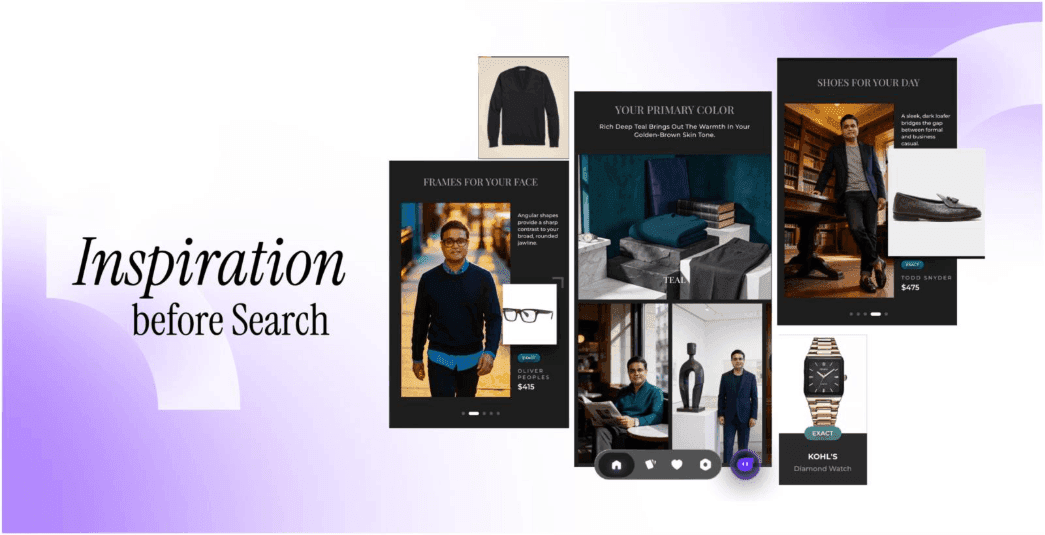
Glance takes this further as an intelligent shopping agent — not a mirror or try-on tool. It reads five signals simultaneously — your physical features, live weather, regional trends, and upcoming occasions — to build a complete, styled outfit look on your AI Twin, before you've even searched for anything, making online discovery as precise as any in-store experience. Why Glance isn't a virtual try-on or AR mirror experience in the first place comes down to sequencing — it isn't reacting to a visit, it's already prepared one.
| AI Magic Mirror | Glance | |
| Where | One specific store location | Anywhere — lock screen, app, TV |
| When | Store hours only | Anytime |
| Starting point | You have to walk in and try | Surfaces proactively, before you search |
| Catalog | Limited to that store's inventory | 40M+ products across hundreds of brands |
| Cost | Free in-store, but requires travel | Free, no subscription |
This distinction — trying on one item versus discovering a complete look — is how Glance's discovery model works : the same structural difference that separates virtual try-on from AI outfit discovery entirely.
Conclusion
AI magic mirrors mark a turning point in retail, removing trial-room friction and giving shoppers a level of clarity traditional shopping rarely offers. As fashion, beauty, and lifestyle brands across the US adopt this technology, the way people decide what to buy keeps shifting toward faster, cleaner, more confident choices — whether that happens in front of a mirror in a flagship store, or on your own phone before you've even opened an app.
FAQs Related to AI Magic Mirror
1. Do AI magic mirrors store your data?
AI magic mirrors usually process your body scan in real time and store only anonymized insights like size preferences, not your face or identity. Many mirrors run on edge computing, meaning your scan is processed on the device rather than sent to a cloud server. Some stores allow opt-out, and the mirror resets after every session.
2. Can AI magic mirrors recommend outfits based on your style?
Yes. Many use machine learning to study your choices and suggest complete looks based on in-store inventory, including alternative colors or trending items — useful for guided styling without waiting for a salesperson.
3. How do AI magic mirrors impact sustainability in the USA?
They cut returns, reduce fitting-room waste, and lower duplicate back-room inventory. Since a large share of US fashion returns come from fit issues, virtual try-ons help shoppers choose better the first time, which also helps retailers plan assortments and reduce overproduction.
4. Can AI magic mirrors integrate with loyalty programs?
Yes — some US retailers connect mirrors to loyalty accounts via QR code sign-ins or store apps, letting the mirror recall past purchases, preferred sizes, or saved looks across stores and platforms.
5. Are AI magic mirrors replacing human stylists in stores?
No — they're designed to support stylists, not replace them. Mirrors handle quick try-ons and color comparisons while human stylists focus on complex choices, fabric feel, and personal taste. Many stores report stylists prefer working alongside the mirrors, since they reduce guesswork and speed up sessions.
Download the Glance app now




Your intelligent
shopping agent.







Your intelligent
shopping agent.